24
Changing living and working conditions
East London’s landscape has been shaped by the demands of manufacturing and technological innovation. Traces of this industrial past linger – from factory waste pollution in the River Lea to the street Storehouse stands on, named after Alexander Parkes, who invented the first synthetic plastic. The people who laboured in the East End also shaped the area through demands for better working conditions, public health and housing. These objects uncover how people worked, lived and continue to persist within an ever-changing east London.
Written by: Floor Assistant team, V&A East Storehouse
Published: April 2026
Working Museum
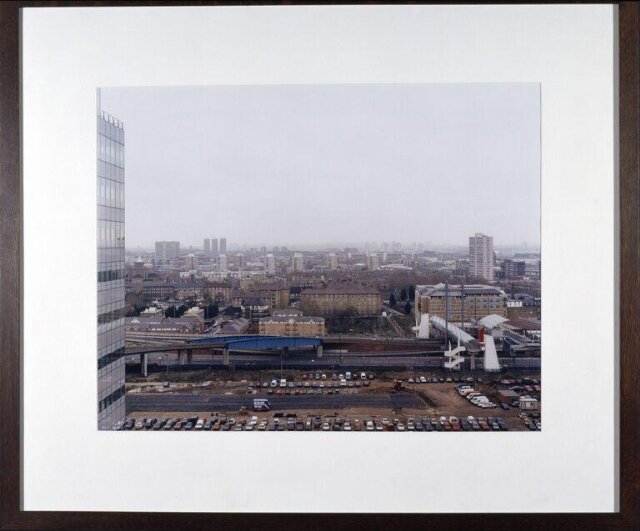
- Museum Number
- E.2306-1997
- Description
- TQ375 804, Looking North
- Artist/Maker
- Stromberg, Gerhard
- Location and Date
- London, 1996
- Materials/Techniques
- Photographic paper, R-type colour photograph
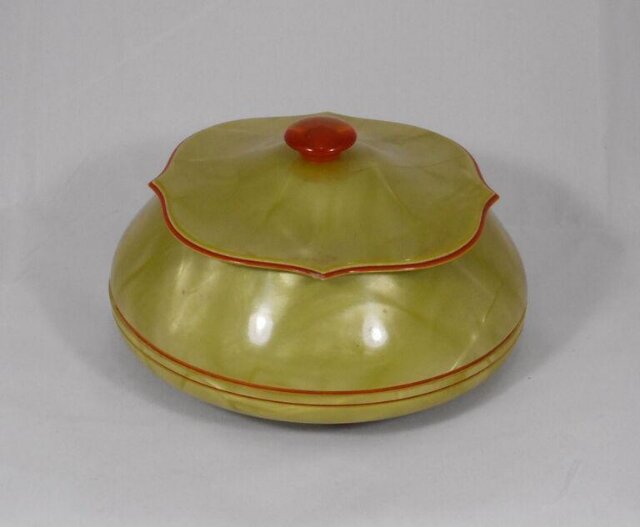
- Museum Number
- C.53-1984
- Description
- Powder bowl
- Artist/Maker
- Halex Ltd.
- Location and Date
- Walthamstow, 1930-1939
- Materials/Techniques
- Cellulose acetate, Compression moulding, Glueing
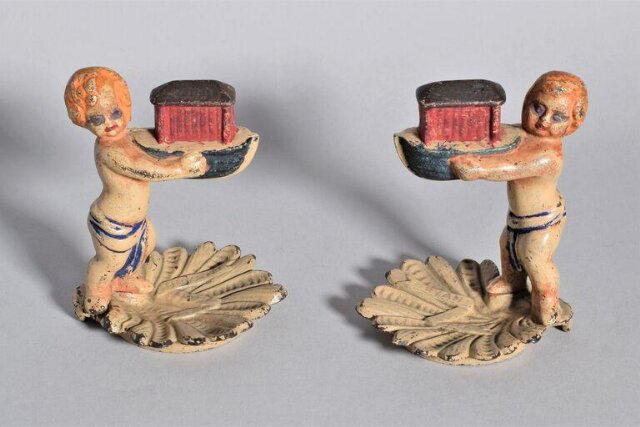
- Museum Number
- CIRC.94-1970
- Description
- Pair of Ashtrays
- Artist/Maker
- Unknown
- Location and Date
- England, ca.1880
- Materials/Techniques
- Cast iron, Paint, Casting, Painting
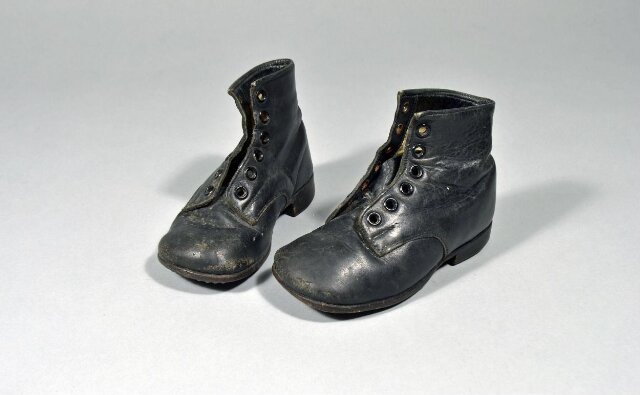
- Museum Number
- B.641-2016
- Description
- Pair of orthopaedic boots
- Artist/Maker
- Lord Mayor Treloar Cripples Hospital and College
- Location and Date
- Alton, 1935
- Materials/Techniques
- Leather, Canvas, Brass, Shoe making
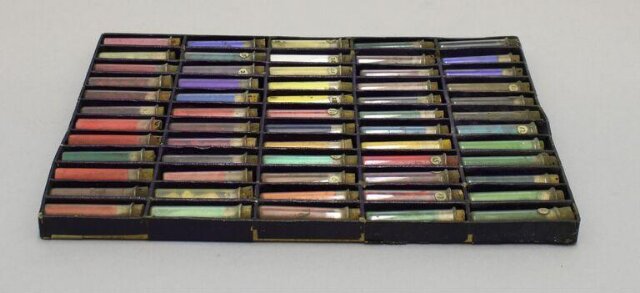
- Museum Number
- S.19:1 to 61-1988
- Description
- Paint manufactured by A. Leete & Co.
- Artist/Maker
- A. Leete & Co.
- Location and Date
- London, late 19th century - early 20th century
- Materials/Techniques
- Pigment, Glass, Cork (bark), Card